The Life of Henry Compton
Introduction
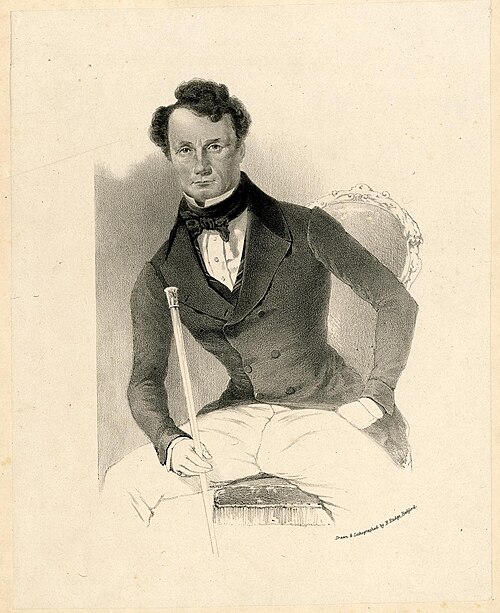
Henry Compton (1805-77) was a celebrated comedian and Shakespearean actor in the late Georgian and early Victorian eras. Though well-known and highly regarded at the time, and a regular star of both the West End and major provincial theatres, his name has not retained any prominence, unlike say Henry Irving or Ellen Terry. However, as I shall seek to demonstrate, Henry Compton was a particularly innovative and pioneering actor. Immediately after his death, naturalism was set to sweep across Europe and find its first advocates in the British theatre. Compton was arguably an early exponent of this approach; not to say even of a prototype cinematic or televisual style. In an era when actors consciously modelled themselves on other performers, he may well have represented a considerable influence on other actors in their gradual movement towards greater naturalism. With Henry Compton, less was definitely more.
Alongside Joseph Cowell, he stands as the second pillar in the foundation of the Cowell-Compton theatrical dynasty; both of them from decidedly untheatrical backgrounds. Admittedly, this takes a rather patriarchal view, since Compton’s wife Emmeline Montague (1823-1911) was herself the progeny of a distinguished stage partnership; that of the actor Henry ‘Bath’ Montague and his actress wife Emmeline Hetling. Joseph Cowell’s first wife might also be considered the progeny of ‘theatrical royalty’ in the form of the Murrays of Edinburgh, themselves related by marriage to the Kembles and Siddons. These earlier forebears will form the subject of a later essay. For the purposes of this present study, our focus is on the life of Henry Compton.
Family Origins & Childhood
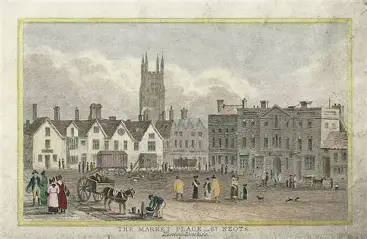
Henry Compton was born Charles Mackenzie on 22 March 1805, the sixth of eleven siblings, in Huntingdon, England, of a strict puritanical family that, some three generations prior, had migrated from Cromarty in Scotland. His father, John, was a non-conformist minister in the Congregational Church at the nearby St. Neot’s. His mother, Elizabeth Symonds, came of similarly puritanical stock with strong ties to the medical profession and with well-established business links in London. Her father, Henry’s grandfather, John Symonds, was a leading surgeon and grand-uncle of Sir Rowland Hill of Royal Mail fame, and stood at the head of several generations of distinguished medical practitioners1.
Such was the austerely religious outlook of these two families that, like Joseph Cowell before him, when it came to entering the acting profession, Charles Mackenzie felt it prudent, if not incumbent upon him, to adopt a pseudonym in order to protect his family’s honour from the stigma of such an association. In Cowell’s case, after some equivocation, he quickly rejected the idea of a stage name, retaining instead his birth name (see my earlier article on Joseph Cowell)2. Charles Mackenzie, by contrast, decided to adopt the surname of Compton from his maternal grandmother; a name subsequently used by succeeding generations.
The sole exception to this family rule was the novelist, Compton Mackenzie (grandson of Henry Compton and great grandson of Joseph Cowell) who proudly reverted to the Scottish original of Mackenzie. However, even he would appear under the stage name of Joseph Compton when pursuing his short-lived acting career. Furthermore, as though to underline just how controversial and potentially alienating the pursuit of a stage career might prove during this period, particularly given such austere familial antecedents, Charles Mackenzie not only adopted a new surname, but also, somewhat arbitrarily, a change of Christian name, from Charles to Henry.3 In short, the stage was widely perceived as ‘ungodly’, licentious and much associated with penury, vagrancy and debtor’s prison. The language was full of derogatory terms for strolling players, to whom even Henry Compton himself referred, in the parlance of the time, as ‘Arabs’.4 it would require a brave and determined spirit to pursue such a career.
What may also have weighed heavily on Charles Mackenzie’s mind was that this stigmatization of the theatre was particularly strong in Scotland and among Scottish families; much more so than in either England and Wales or Ireland. The opposition of the Church of Scotland to theatrical activity was fundamental and vociferous. Edinburgh did not gain a permanent theatre until 1747, (nearly two centuries after England) and even then it operated clandestinely without a Royal patent or licence; and unlike the rest of the United Kingdom, there was little appetite for touring companies or strolling players in the smaller towns and villages.5
Twelve years younger than Joseph Cowell, Charles Mackenzie (aka Henry Compton) did not in fact take up acting until 1826, when he was twenty-one years old. This was some fifteen years after Cowell had done so; and five years since Cowell had set sail across the Atlantic to pursue his ambitions in the United States. Unlike Cowell, Compton would pursue his career entirely within the United Kingdom. As such, his life represents a generational shift in the workings of the profession and offers insights exclusively into British and Irish developments during the first three-quarters of the nineteenth century.
His Memoir of 1879, unlike Cowell’s of 1843, turns out in fact not to have been self-penned at all but consists of an elegiac tribute (he had died two years prior) co-written, compiled and edited by his sons Charles and Edward, along with contributions from fellow professionals and a selection of his own correspondence. As such it lacks some of the idiosyncratic observations and intimate reflections of Cowell’s more swashbuckling account. Nevertheless, it is sufficiently detailed and perhaps even more objective in its record of the theatrical developments of the period.
The City of London & First Employment
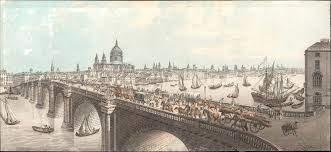
Just as Joseph Cowell had initially adopted a more outwardly respectable occupation (in his case the Royal Navy), so Charles Mackenzie at first eschewed any notions of a life on stage. At some point in his teenage years, (the age is not specified) he was employed in the family business of his Uncle Samuel (his mother’s brother), a Western Cloth merchant based in Aldermanbury, a prosperous area of Cripplegate in the City of London. His role seems to have been that of a junior clerk, and one that his “high-spirited” and “exuberant”6 nature could scarcely bear. Edward Compton writes:
“…he was not happy. His spirit chafed under the yoke of daily work, the long hours that were so much more the rule than in more liberal and modern days.”7
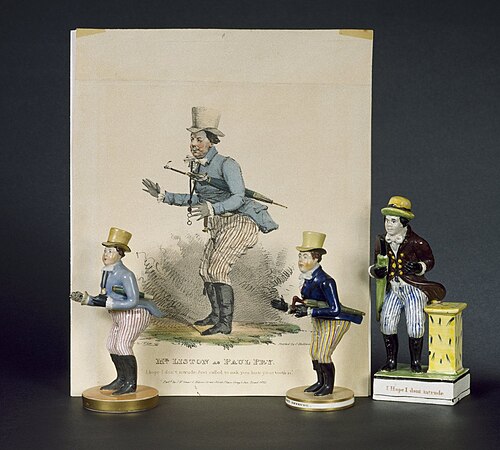
Despite the seemingly benevolent guardianship of his Uncle Samuel, the young Charles Mackenzie twice ran away from his City employment, only to be summarily returned. Finally, “a casual and most singular incident occurred” by which the austerely puritanical Uncle Simon agreed to accompany his young nephew to the theatre. Together, they attended a performance of the comedy Paul Pry at the Haymarket theatrefeaturing the then celebrated talents of John Liston (1776-1846), the “prince of broad comedians”.8 This seems to have fired up the young Charles Mackenzie’s imagination.
“His whole brain was caught and bent on the novel scene. For days and weeks afterwards he would rehearse the performance. Umbrella in hand , he would stride up and down the impromptu stage of his uncle’s modest sitting room; and if the report of his relatives may be trusted, with no mean imitation of his droll and accomplished model.”9
Like many a young theatregoer, Charles Mackenzie had been instantly stage struck.
Early Influences
The experience inspired a third and finally successful escape from the dreariness of commercial employment. His memoir states:
“For some time he was lost , as it were, to his nearest relatives. He was slowly and hardly fighting his way up the first and difficult steps of what he in his last days characterised as an ‘exacting profession’. No one, perhaps, but himself could ever know his struggles, and his brave endurance of hardship and discouragements. Nor was it till he had won a firm standing in his profession, and could justify by the result what appeared like wayward disobedience, that he again made himself known to his family.”10
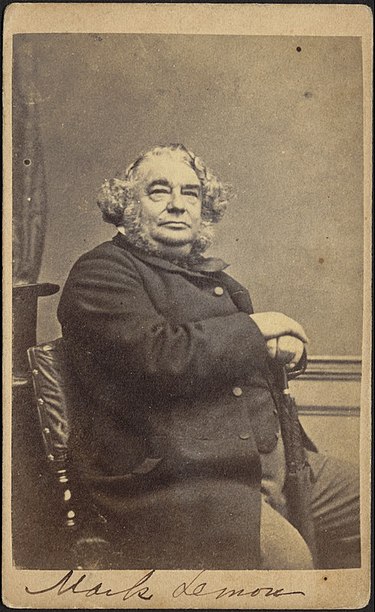
In fact, this family estrangement lasted several years. During this time what seems to have facilitated his initiation into the acting profession is his fortuitous association with a young writer and socialite called Mark Lemon (1809-70). Lemon was the son of a London hop merchant and ironically, it was this commercial connection that led to the two young men encountering one another in the environs of the City. Lemon would later go on to establish a distinguished career as an actor and journalist and as the author of over sixty melodramas. In 1841, he founded the satirical magazine Punch. His association with the young Charles Mackenzie was to prove lifelong and is an early example of the latter’s ability to strike up providential and long-lasting friendships.
It was fashionable at this time for middle class families to present a form of private domestic entertainment referred to as an ‘At Home’. This had partly evolved as a means of circumventing the strict controls on public performance enforced by the Lord Chamberlain’s office; but it also represented a means by which a family might display its increased economic and cultural status, and perhaps extend its social, not to say business, network.
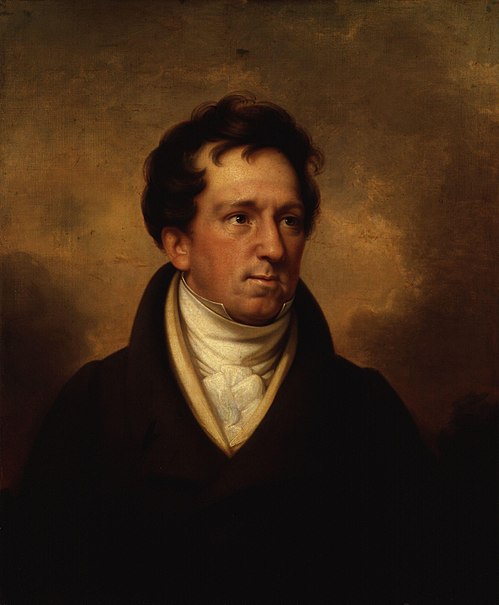
For just such an evening’s diversion, the Lemon family had hired the services of the famous actor and mimic Charles Mathews (1776-1835). Ironically he too was the son of a disapproving non-conformist minister11 and one with religious connections to Charles Mackenzie’s birth location through the puritanical Countess of Huntingdon. Charles Mathews would go on to forge an extremely successful career on both sides of the Atlantic, indeed crossing paths with and befriending Joseph Cowell in America, such was the relatively small world of the Georgian theatre.
Mathews’ groundbreaking performances took the form of a series of sketches that he referred to as a monopolylogues. Characteristic of his work, these pieces comprised a virtuosic one man show in which the actor would play every part.12 They involved story-telling, recitation, mimicry, quick change and comic song, and like John Liston’s Paul Pry, placed the emphasis firmly on broad comedy. Edward Compton observes:
“The effect of seeing the performances of Liston and Mathews was to arouse in my father the dormant love of acting, which for want of a stimulus had long been concealed. His course was that followed by many of his fellow-comedians both before and after him. He determined to try his hand at some entertainment similar to those he had seen, and for the next twelvemonths he delighted his friends by giving some sketches.”13
It was these sketches, performed in the aforesaid manner of the ‘At Home’ that gave Charles Mackenzie his entrée onto the professional stage. From the few short extracts reprinted in his memoir, it is clear that, like Mathews, he focused on broad comic stereotypes. For example, he presents a prevaricating ditherer called Mr. Waglington alongside his much-complaining footman, Nathaniel Nag; also a simple-minded Scotsman; and an over-inquisitive old woman called (with a nod to John Liston) Paulina Pry. Each of these characters relates a short comic anecdote usually ending with a punning punch line of varying quality.
However, it is one thing to be stagestruck and display an enthusiasm for theatre, it is another to take the bold step of seeking it out as a career; and especially, as has already been stated, given that profession’s standing at the time and Mackenzie’s austere background. What surely must have contributed to his decision was the exponential growth in the number of theatrical venues during the late Georgian period, and the concomitant increase in professional opportunities; and in particular the rapid expansion of minor theatres in London.14
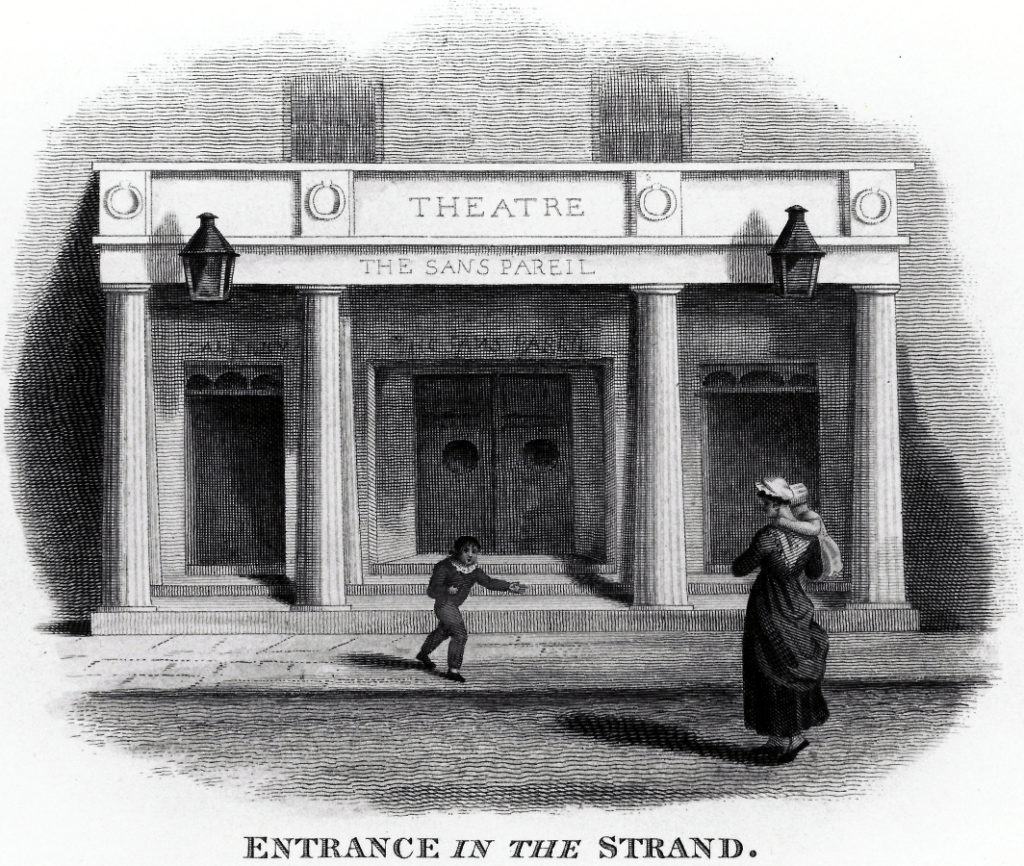
Although the legitimate theatre was still dominated by the two royal patent companies of Covent Garden and Drury Lane, a plethora of smaller venues had arisen, both licensed and unlicensed, over the course of the late eighteenth and early nineteenth centuries. In 1766, Samuel Foote had opened his vibrant and successful Little Theatre in the Haymarket; a venue which saw the debuts of both John Liston and Charles Mathews. Likewise, John Scott had opened the Sans Pareil on the Strand in 1806, which was followed by the Olympic Pavilion in Wych Street and the Royalty theatre, close to Mackenzie’s place of employment in the East End; south of the river, the Coburg opened in 1819, while entertainment in some form had been running at Sadler’s Wells since 1683. It has been estimated that over 24 minor theatres appeared in the wider London area between 1660 and 1843.15 In short, it was a growth industry, however insecure its employment opportunities.
In the country at large there was a similar, if more modest story. Although the rigorous strictures and censorship of the 1737 Licensing Act had placed severe restrictions on theatrical activity, new permanent premises, both legitimate and unlicensed had continued to open. Dublin had received the first royal patent outside of London in 1662 and in 1758 was crowned with its third permanent theatre, gaining an exclusive patent in 1786.16 Bath gained a licensed touring company and permanent theatre in 1705 while in Bristol, more puritanically minded but ultimately yielding, the Jacob’s Well theatre opened in 1728, receiving an official royal patent in 1768. And so on throughout many of the major towns and cities of England including Norwich in 1768, Birmingham in 1774, York, Hill and Leeds in 1769 and Manchester in 1775. Associated with these major theatrical centres were touring circuits of the smaller towns and villages, and these were to prove crucial in the early years of Henry Compton’s career, just as they had for Joseph Cowell.
Added to this, there was the burgeoning number of theatre reviews in the press such as those in the Examiner or Morning Chronicle by critics such as William Hazlitt (1778-1830) and Leigh Hunt (1784-1859). And either here, or by word of mouth on the City streets, the young Mackenzie would have learned that the most celebrated stars of the London stage were able to command considerable salaries. In 1776, the highest paid performer in Drury Lane, Mary Ann Yates (1728-1787), was receiving £26.10s weekly; while David Garrick (1717-1779), as actor-manager had been able to draw £500 annually. To put this in perspective, the average weekly wage for a working man in 1800 was around 15 shillings.17 As Charles Mackenzie would soon discover, these salaries of the top billing actors were very far from typical of the lower ranked performers, many of whom were on subsistence wages; but they surely must have added to the ever-growing commercial allure, the tempting opportunities, of a calling that was otherwise so disreputable and fraught.
A Strolling Player

Having turned his back on the family business and determined upon a life on stage, Charles Mackenzie’s first step was to secure the representation of “the theatrical agent of that period, a Mr. Simms”.18 We learn little else about this apparently significant personage beyond the fact that he conducted his business at the (still extant) Harp tavern in Russell Street near Drury Lane in the heart of theatreland. It was Simms who provided Mackenzie aka Henry Compton with his initial professional engagements. First came a season in Lewes with what appears to have been a walk-on part and some stage management in Shakespeare’s Coriolanus. After this Compton (the stage name by which we shall now refer to him in his professional capacity) moved to Leicester where he was cast in the more prominent role of Captain Crosstree in Black-eyed Susan, a nautical melodrama by Douglas Jerrold (1803-57). Having made a strong impression, he rapidly progressed to the roles of Richmond in Richard III and Macduff in Macbeth.
At this point it should be emphasised that during this period neither Lewes nor Leicester had a permanent, custom-built theatre. Henry Compton was being employed as, in his own derogatory parlance, an ‘Arab’ or travelling player, offering performances in some form of ad hoc venue. In this instance, whether a tavern or barn or domestic setting is not made clear. Regarding his subsequent engagement, however, his memoir makes this quite apparent. It states: “We next find him joining a strolling company at Cromer, a small fishing village in Norfolk”.19
Following this we learn that he joined the Bedford circuit. Again, at this time, neither Bedford nor Cromer enjoyed the benefit of a permanent theatre. In 1826, as previously noted, such venues were still relatively rare. Legitimate, mainstream theatre was still dominated by the royal patent system which granted the Theatre Royal, Drury Lane and the Opera House, Covent Garden a virtual duopoly on the performance of plays – legally at least, if not de facto. To launch oneself into a stage career in 1820s Britain took raw nerve close to downright recklessness; either that or superhuman confidence and determination. Like Joseph Cowell before him, Henry Compton, seems to have been possessed of all three; that along with an alert mind, and a good deal of innate talent.
Again and again Compton’s memoir emphasises the financial insecurity, not to say penury in the lower ranks of the profession. At Lewes the cast make a joke of their unreliable salaries with a pun on the Roman banners in Coriolanus: ‘SPQR’ “freely translated” as “Salaries paid queerly regularly”.20 Indeed, having paid his agent’s fee, Compton was left with no more than five or six shillings; this at a time when a week’s lodging in a tavern could cost 21 shillings a week. As a result, for his engagement in Leicester, Compton was constrained to walk the entire journey, some 150 miles; while at Cromer his destitute situation was only redeemed by the unexpected support of an old friend who offered him board and lodgings.
His next engagement was also as a “promising stroller”, this time in Daventry where, in 1828, he was cast as Dr Pangloss in an adaptation of Candide and in which he performed the comic song ‘Guy Fawkes’. The rendering of such musical pieces was traditionally an added requirement of the low comedian’s role, and already Compton’s leanings were very much towards low or broad comedy. His musical metier found further expression when he next appeared for the first time in London, or rather on its then outskirts in Hammersmith, performing his own composition ‘A Peep At the Signs And Landlords Of Hammersmith’. The song title itself bears witness to the kind of venue that was available to him in these formative years, because again, it was not, in fact, until as late as 1888 that Hammersmith obtained its first permanent theatre at the Lyric Hall.
The Lincoln Circuit: A ‘Legitimate’ Theatre
Compton was inching his way ever closer to the theatrical heartland of London in Drury Lane, the aspiration of so many novice actors, then as now. However, he was not yet to achieve his goal; for his next engagement we find him at Lincoln, on that same well-established circuit that had benefitted Joseph Cowell in the 1818-19 season and which he too had used as a stepping stone towards the West End. But more importantly, as regards Henry Compton, he was about to make his first appearance in a legitimate, custom-built theatre enjoying the official seal of a royal patent: the Theatre Royal, Lincoln.
We can also deduce that this must have been in 1829, that same year when, after three years absence, he saw fit to rekindle his family ties and return to visit his uncle in the City of London. It is worth re-emphasising that his memoir states that it was not until “he had won a firm standing in his profession and could justify by the result what appeared like wayward disobedience, that he again made himself known to his family.”21 Being employed on the legitimate, licenced stage of the Theatre Royal, Lincoln had provided the appearance of just such a “firm standing” and meant that Henry Compton could legitimately claim to distance himself from the strolling players generally held in such low esteem. In common parlance, he had ‘made it’.
First opened in 1806, the Theatre Royal Lincoln remained fully operative until its destruction by fire in 1892 and subsequent replacement the following year. In the 1820s, this venue would have been at the very pinnacle of the northern touring circuits (along with York), and Compton fully capitalised on this golden opportunity to cement his growing reputation. His memoir states that he “performed in all the legitimate comedies and became an immense favourite”.22 Indeed, he was even invited to give a speech at the Lincoln Shakespearean Dinner of 1832. Intriguingly, he used this occasion to aim some highly barbed criticism at his puritan forebears and the hypocrisy, as he saw it, of their attitude towards theatre. The Lincoln Gazette published the following report:
“Mr. Compton, on proposing the memory of Milton could not help observing that […] the modern Puritans […] forgot, or perhaps it was not convenient to remember, that ‘Paradise Lost’ was founded on a play, that the ‘Mask of Comus’ was frequently represented, and that all his [Milton’s] works had a positive dramatic tendency.”23

The Theatre Royal Lincoln provided the added bonus of Compton’s first encounter with the most renowned actor of the period, Edmund Kean (1787-1833). It was here, in 1832, that Henry Compton would play the lawyer Jack Marall to Edmund Kean’s villainous Sir Giles Overreach in Philip Massinger’s A New Way To Pay Old Debts. This was during Kean’s final provincial tour of the United Kingdom upon his return from a successful tour of the United States in 1826. Here, as if once again to emphasise the small world of the early nineteenth century theatre, he had been managed by Joseph Cowell.24 These were Kean’s declining years; he would die just a year later in May 1833. Yet, even so, Compton declares himself “taken aback at his electrical rendering” which momentarily left him embarrassingly lost for words on stage.25 The great actor it seems was hardly put out and claimed to have grown used to such reactions.
Hard Work & Low Pay
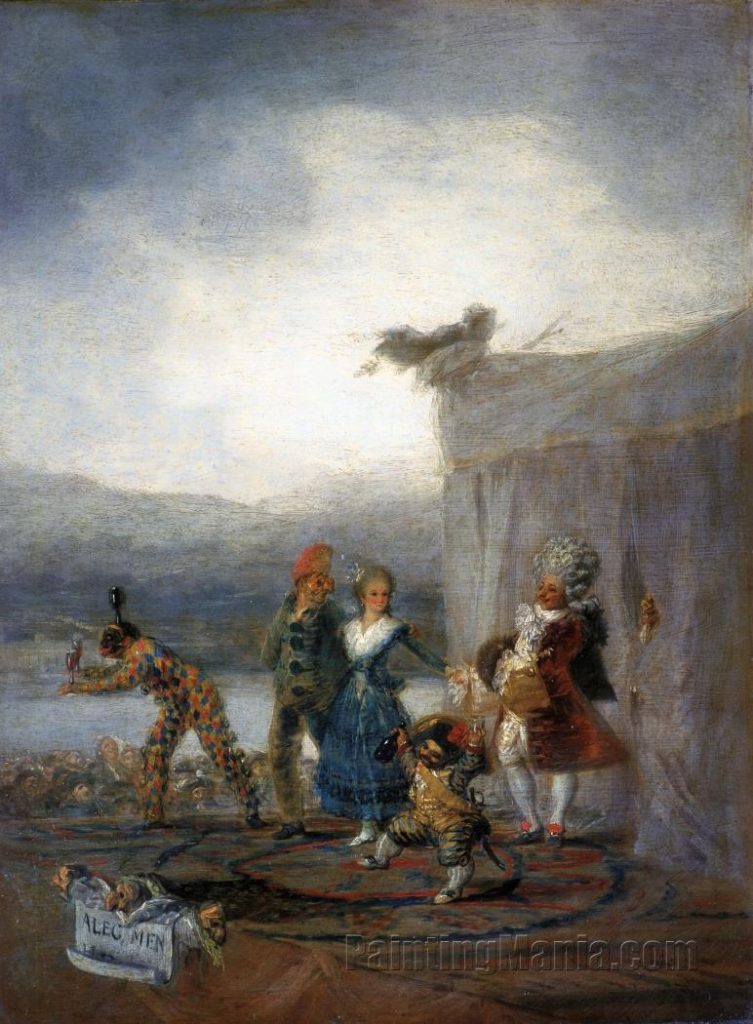
Soon after this production at Lincoln, Henry Compton moved on to the even more prestigious York circuit. It should be emphasised here that the touring circuit of a major theatre such as Lincoln or York could be extremely extensive, such was the growing appetite for live performance in an age when permanent venues were still relatively few. The York circuit, for example comprised Doncaster, Halifax, Hull, Leeds, Pontefract and Wakefield as well as a host of smaller towns and villages. Often the actors would be expected to walk the long distances from one venue to the other. Edward Compton writes:
“Many a long season did they rough it together; many a long walk, sometimes as much as thirty miles, did they take in the daytime that they might open in some village on the same evening.”26
It was a hard, physical life and the levels of pay were barely commensurate with the levels of skill or talent, let alone the ‘fame’ or ‘glamour’ that might ensue. The substantial earnings of a David Garrick or even a Charles Mathews and John Liston in the West End of London must have seemed a far cry from these lowly provincial circuits. Henry Compton would later recall that 25 or 30 shillings per week was at this time considered a very good salary, “especially when the two or three benefits awarded to him ‘on circuit’ were reckoned.”27 This equates to roughly one and a half pounds in old sterling, which in today’s spending power would amount to approximately £185.28 Hardly riches! When we consider that the actor’s work was erratic and peripatetic and the theatrical season hardly a full year, but closer to 30 weeks, we can arrive at an approximate annual salary somewhere between £40 and £50; in the region of £6,000 p.a. in today’s spending power.If this seems barely credible, a posthumous tribute by the actress Madge Kendal (1848-1935) makes Compton’s penury quite clear. The daughter of William Shaftoe Robertson (1799-1872), who ran the Lincoln circuit during Compton’s employment there, Madge recounts one her father’s anecdotes. He, Compton and a fellow actor named Chippendale had recourse to walk thirty miles between engagements. Unfortunately, they were only in possession of five shoes, so they “took it in turns to walk with a single shoe until their destination was reached!”29
To this frugal income might be added, as Compton points out, the revenue from benefit performances or tribute dinners. These however would often be ‘in kind’ such as, in Compton’s case, in the form of a snuff box and a gold watch guard. When we consider that in the provinces around this period, a chief clerk might enjoy a salary of £200 and a company secretary £1,200, even a relatively successful actor’s pay was barely more than subsistence. These former occupations were of the kind that Compton can be said to have turned his back on in the City in order take up the stage. Even a common farm labourer might earn 10 or 12 shillings per week in the 1830s.30 In an example of Compton’s rather dark wit, he is quoted in his memoir as saying:
“[…] though we worked hard, played hard, fought hard, and had many hard engagements, we brought home very little hard cash with us.”31
Considering these pay levels it is hardly surprising that the profession should have been so generally identified with penury, vagrancy and debtor’s prison. Surely, in some ways, a self-fulfilling prophecy; or at the very least, a Catch 22! It should not be forgotten that the 1737 Licensing Act that had set out (though ultimately unsuccessfully) to rigorously control theatrical activity had begun life as an attachment (by the wily prime minister Robert Walpole seeking to suppress satirical attacks on his own person) to what was in fact a vagrancy bill! This bill contained the provision that anyone performing a play for money without a royal patent or licence from the Lord Chamberlain should “be deemed a Rogue and a Vagabond”.32 Also it required that a copy of any spoken or sung material be submitted to the Lord Chamberlain’s office. Failure to comply could result in a crippling fine of £50 while in addition a company member could face the penalty of a severe whipping or imprisonment as a vagabond under the earlier Vagrancy Act of 1714.33
When one adds to this the constant volley of polemics against theatrical performance such as for example Jeremy Collier’s widely read ‘A Short View of the Immorality and Profaneness of the English Stage’ of 1698 and the Church of Scotland’s anti-theatrical ‘Admonition and Exhortation’ of 1756, it is something of a tribute to the appetite and determination of the theatre loving populace that it not only survived, but ultimately thrived throughout these decades. To emphasise the tainted reputation of the acting profession, it is worth quoting this searing description from the pen of the critic William Hazlitt:
“They live from hand to mouth. They plunge from want into luxury […] chilled with poverty; steeped in contempt, they sometimes pass into the sunshine of fortune and are lifted to the very pinnacle of public favour. They have no means of making money breed and all professions that do not live by turning money into money […] spend it.”34
And this from a devotee of theatre! However, the plain fact is that an increasingly wealthy, literate and aspirational middle class in the boom years of the agricultural and early industrial revolutions provided a high demand for cultural diversion. It was often the case that locally powerful individuals and families were happy to either ignore or face down the Lord Chamberlain’s office and central government with their own local licenses and private money. Dedicated, stagestruck, literate and determined actors like Henry Compton provided the supply.
The York Circuit
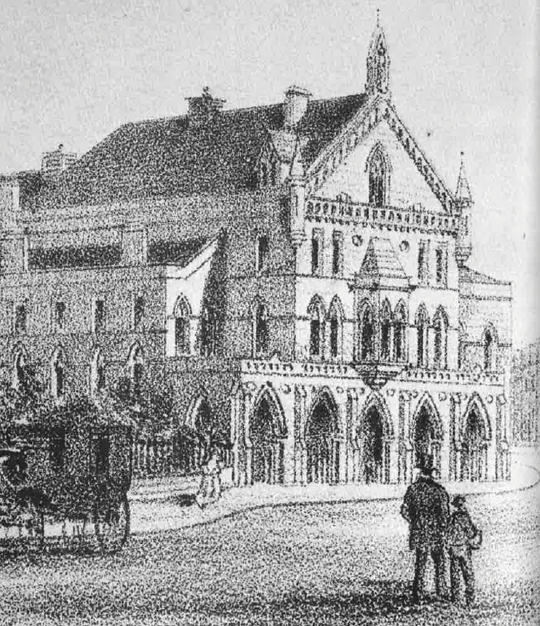
In 1833, Henry Compton took up his new engagement at the York Theatre Royal under the management of T. J. Downe. His memoir states:
“Here he at once hit the taste of his audience, and in one rival playhouse and another so mastered his art, that his name became celebrated in all that part of the country, while large houses were the result of his name being put up for a benefit, and enthusiastic and delighted audiences greeted him everywhere.”35
The impression we gain is of a diligent professional, probably an actor’s actor, someone who brought a good deal of craft and attention to his trade, and who acted as a solid and reliable company member. His playscripts were often adorned with useful notes such as for his role as Dr Pangloss in Candide, where he made forensic analysis and translation of quotations in the text.36 His memoir states that “The morning was given up to rehearsal and study”, while even in his leisure time, it seems, he would “talk over professional affairs, the frequency of rehearsals, the luck of casts, Brown’s stage-wait of last night or the chances of the next benefit.”37
And when it came to honours and benefits, his professionalism paid off in terms of the regard in which he was held. In 1836 at the Leeds Theatre Royal (part of the York circuit) no less than 78 subscribers contributed to the award of a snuff box bearing the inscription:
“Presented By the Frequenters of the Theatre Royal, Leeds to HENRY COMPTON, In testimony of their admiration of his professional excellence as a Comedian, Leeds, Nov.1st, 1836.”38
Shortly afterwards, he would be similarly honoured in Hull, another location on the York circuit, with the presentation of “an elegant gold watch-guard”.39 Such benefits, tributes and honours, often bestowed at fairly lush dinners and tavern events, were by no means inconsequential. They could represent a significant part of the actor’s income, often in the form of an item that would hold more permanent value than mere cash. And, from the management and audience point of view they, in a certain sense, kept the actor ‘on his toes’. The more professional, the more successful and popular, the better rewarded a performer might be. It was a mutual arrangement that in a curious way acted for the ‘survival of the fittest’; or at least, the most popular.
The West End
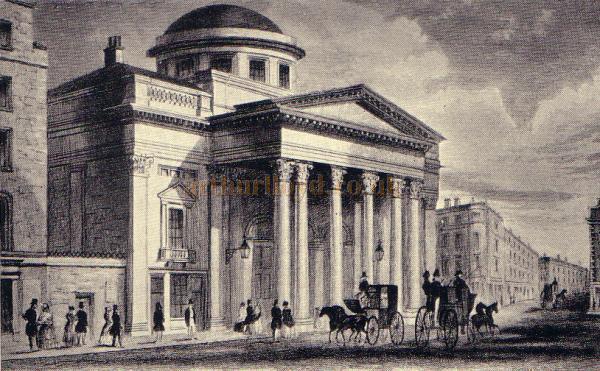
Then finally, after eleven years of what might be considered ‘hard labour’ on the provincial circuits, Henry Compton received the offer of a London engagement. This was from the Lyceum Theatre, Drury Lane no less; then known as the English Opera House under the relatively new management of Alfred Bunn (1796-1860). Bunn was one of the leading, impresarios of the time and also, since 1833, in charge of both the Opera House, Covent Garden and the Theatre Royal, Drury Lane. He was also a staunch advocate of the royal patent system, which he saw as defending his theatrical interests.40 A notice was duly posted stating that:
“Mr. Harry Compton, from the Theatre Royal, York, will make his first appearance in London on Thursday next, July 20th, 1837, in the character of Tommy Tadpole, and will immediately appear in a new farce expressly written for him.”41
Note that not only is Henry Compton’s billing pre-announced, but he is to appear in a role especially written for him; not bad for a provincial actor making his West End debut!
As it happened, there was a rescheduling of the programme for his first night and Compton actually made his debut as Robin in a play entitled The Waterman. The role of Tommy Tadpole that Compton would later play was in the comedy A Quarter to Nine by the prolific playwright Richard Brinsley Peake (1792-1847). Peake is principally remembered today for having produced the first stage adaptation of Mary Shelley’s Frankenstein, in which he came up with the much copied phrase “It lives!”. What had paved the way for Henry Compton’s London debut was a personal recommendation from no less a figure than Mark Lemon, his old friend in the City of London, and now a leading author of melodramas on the West End stage. In a letter of 1 July 1837, R.B. Peake wrote to Henry Compton,
“My friend and my brother-author, Mark Lemon, has given me such an account of you […] I somehow or other feel sure I shall not be disappointed. […] if the public take to you there are four more parts to follow this.”42
R.B. Peake was in a good position to make such an offer as he was at the time not only a regular playwright for the Lyceum, he was also its treasurer and acting manager under the auspices of Alfred Bunn. The theatre itself had been recently reopened on 12 July 1834 in its fifth incarnation, the previous building having burned to the ground (a frequent hazard of the era) in 1830. It had in fact been running as a place of entertainment since 1765, first as an exhibition hall and home to the Society of Artists, and subsequently as a concert and dancing venue. By 1837, it had positioned itself as a major venue for melodrama, burlesque and farce as well as the more traditional classics.
Peake’s letter to Compton also offers some fascinating insights into the state of theatre activity at the time. Firstly he claims that “Theatricals must turn for the better, as they are at their worst.”43 Commercially, it was not a good time for the larger, more established theatres such as Covent Garden and Drury Lane. They were feeling the pinch of competition from the plethora of minor venues that had sprung up around the capital. Not only that, but other entertainments such as the increasingly popular song and supper clubs, dance halls, circus, pleasure gardens, penny dives and backroom tavern attractions must all have taken their toll on what Peake rather pompously refers to as “theatricals”.
Secondly, he suggests “The young queen must be feted. She will encourage the stage.”44 Victoria had just ascended the throne in that same year, of 1837 and had already shown a distinct inclination towards theatrical entertainment. Royal patronage of the theatre was nothing new. However, the endorsement of such a chaste and dignified young sovereign, in marked contrast to her Hanoverian predecessors, could surely do much to dispel its more disreputable aspects; another step, one might conclude, towards the de-stigmatization of the stage. Thirdly, and in connection with this, Peake writes:
“I am told that you have considerable humour and that you are a gentleman. We have low comedians in London who possess the first quality, but are minus in the latter. A gentleman will always make his way.”45
Herein lies a clear indication that the gentrification of the acting profession was in its infancy, but surely underway. Nevertheless, some trademarks of the vagabond strolling player’s style still lingered on as the author requests of Compton: “If you have any sure song you would like to sing, I will introduce it for you.”46 No matter the context of the play, there was still room for the arbitrary inclusion of the low comedian’s musical interlude!
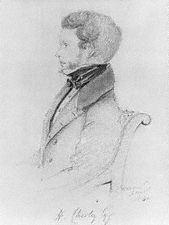
For his debut performance Henry Compton received a glowing review from no less an authority than Henry Chorley (1808-72). ‘Old Chorley’ as Compton’s memoir refers to him was one of the foremost literary, music and theatre critics of the day, writing principally for the Athenaeum. Of Compton he wrote:
“[…] a low comedian of the right school […] He appears to us to be a sensible and chaste actor, one who has a proper respect for the part he has undertaken to represent, and a proper contempt for any laugh which is obtained at the sacrifice of its true position in the piece.”47
Compton had honed his craft in the provinces and clearly had no intention of wasting this precious opportunity to establish his reputation in the West End. More parts quickly followed in the constant turnover of productions at the English Opera House or Lyceum as it was more commonly known. In The Iron Chest by George Colman the Younger, he was cast as Fitzharding, once again alongside Edmund Kean as Sir Edward Mortimer. There followed supporting roles to a whole retinue of some of the biggest stars then appearing on stage, including William Macready (1792-1873), William Farren (1786-1861), John Baldwin Buckstone (1802- 79), and the Irish actor Tyrone Power (1797-1841). In the opera La Sonnambula by Vincenzo Bellini he was cast as Alessio (no mean testament to the quality of his singing voice); then subsequently as McSwill in The Vampire, a melodrama of 1820 by James Robertson Planché (1796-1880) and as Pan in Midas, a blank verse drama by Mary and Percy Bysshe Shelley, as well as a host of other popular works now largely forgotten. And all this in the span of just a few months, for on 7 October of that same year 1837, Henry Compton transferred his talents to the even more prestigious Theatre Royal, Drury Lane – also under the management of that same czar of the theatrical world Alfred Bunn.
The Theatre Royal, Drury Lane
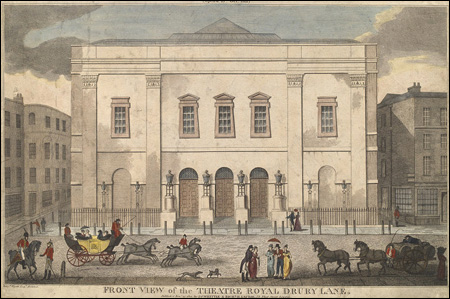
It was here that he further cemented his growing reputation as a performer of Shakespearean and Restoration comic roles. Of his portrayal of Slender in The Merry Wives of Windsor, one critic enthused: “It was a magnificent piece of acting; seldom has anything been seen like it before; and it will probably be a long time before another actor makes his appearance who will be at all worthy of being compared to Mr. Compton in this character.”48 There followed further successes as Tony Lumpkin in She Stoops to Conquer, Touchstone in As You Like It, and Lancelot Gobbo in The Merchant of Venice. Again, he was cast alongside some of the leading actors of the time, for example as First Gravedigger alongside Charles Kean (1811-68) as Hamlet and alongside John Baldwin Buckstone in a farce entitled Our Mary Anne.
Then came, in the view of his actor son Edward, “one of my father’s greatest triumphs”, appearing as Marall to Charles Kean’s Sir Giles Overreach in Massinger’s A New Way to Pay Old Debt.49 A string of further successes followed until on 2 July 1838, we find Compton once more back at the Lyceum, still at this time known as the English Opera House. Here he appears in a new farce by R.B. Peake (being true to his word in offering further roles), and a melodrama by Planché. A further string of farces included a work by his old friend Mark Lemon entitled The M.P. For the Rotten Borough. His memoir of 1879 offers a comprehensive list of his performances at this time, but suffice to say there was an extraordinary turnover of plays, some produced for just a handful of performances and requiring an extreme level of rehearsal, concentration and dedication, not to say memory. There was also a considerable range from Shakespeare to melodrama, opera to farce.
Then, in 1839, we suddenly find Henry Compton back at Drury Lane, “accepted at once by critics and public”50 according to his son Edward. It seems as though Alfred Bunn was running his trio of West End theatres as a kind of inter-changeable repertory company, each venue borrowing cast members from the other to suit its particular production requirements. But professionally promising and invigorating as this may have been, it was also intrinsically insecure for the actors. After appearing in a new play called The King of the Mist and subsequently as Verges in Much Ado About Nothing, Henry Compton found himself summarily unemployed; this, it seems, through no fault of his own, but rather as a consequence of the fundamental insecurity of the theatrical profession and its finances. Edward Compton writes:
“In addition to being suddenly disengaged, my father lost some weeks’ salary, and was consequently obliged to take compulsory holiday in the country, waiting Micawber-like for something to turn up.”51
‘Resting’
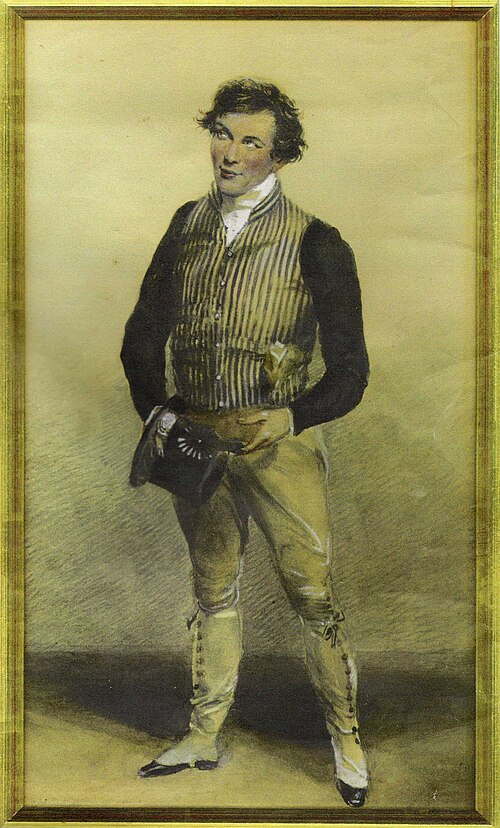
Published correspondence with his agent at the time, a man called W. Kenneth, makes clear that Compton took refuge in Cambridgeshire. This implies that his family had come to the rescue, as no doubt they did and still do for many an impecunious actor. He was at this point a single man and as such had relatively few responsibilities. His letters also make clear that the Alfred Bunn theatrical empire, then comprising the Lyceum, the Theatre Royal, Drury Lane and the Opera House, Covent Garden, as well as the Surrey theatre and Theatre Royal Birmingham, had hit hard times. In 1840, Bunn was declared bankcrupt.52 His manager at the Theatre Royal, a certain William John Hammond (1797-1848) suffered the same fate, with debts of £8,000 for which he spent over a year in debtor’s prison. Even at its most prestigious level, the theatrical profession was a fraught world.
Compton’s agent partly ascribes this to “the decline, almost to extinction, of legitimate drama”,53 the competition from alternative forms of entertainment being now so fierce. He advises his client to “get away from London”, which is precisely what Compton proceeded to do. In fact, for a period he got away from England altogether, enrolling for a season at the Theatre Royal Dublin, a patented theatre since 1821 and then under the skilful management of a certain Mr Calcraft.
A Return to Drury Lane
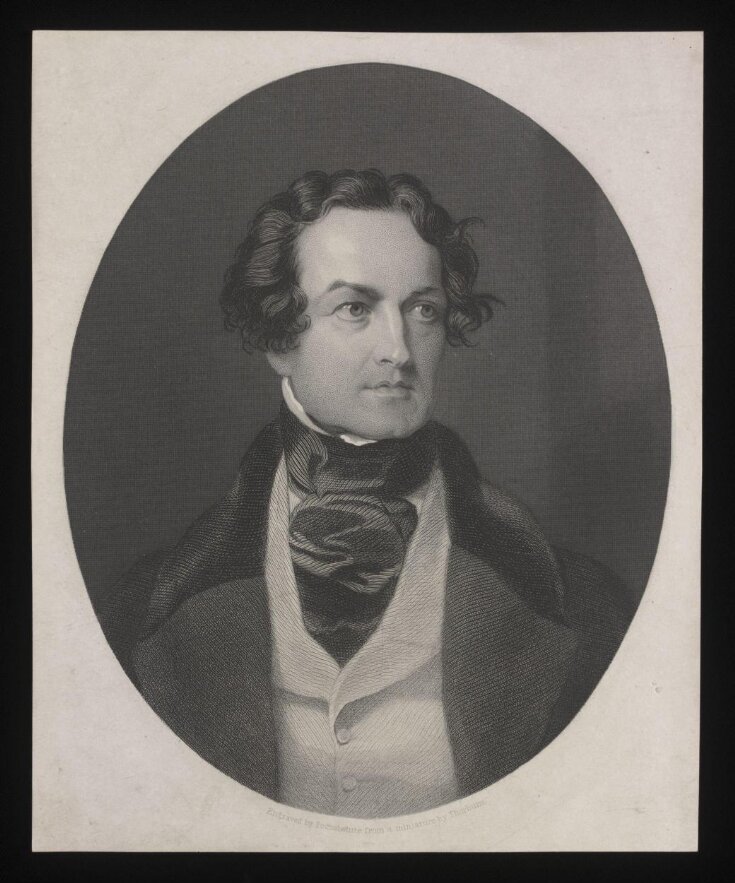
This self-imposed exile was short-lived; Compton’s talents were too widely appreciated for him to be away from London for very long. Soon he was recalled to the Theatre Royal Drury Lane by its newly-installed actor-manager, the great William Charles Macready. Though reticent at first to accept ‘old men’ roles while still in his thirties, such was Macready’s admiring and persuasive power that in September 1842 Compton returned to his former company. Here he played the low comic role of Solus in Everyone Has His Fault by Elizabeth Inchbald (1753-1821), and then subsequently of Polonius, Sir Peter Teazle and of Launcelot Gobbo to Macready’s Shylock in The Merchant of Venice; all well received. His performance of David in The Rivals, was described as “admirable” and his Launcelot Gobbo as “quaint without vulgarity”.54
In Henry Compton, Macready may well have recognised a fellow spirit; a sober and serious-minded actor who countered the popular image of louche insobriety. Their extended correspondence reveals a mutual respect in which they share a proper regard for the theatrical art. Both actors were rigorous students of text and stagecraft. Both were keen to enhance the professional status and broaden the appeal of the theatre and to rescue legitimate drama from it more bowdlerizing exponents and populist competitors. In some ways, Macready can be said to have taken Compton under his wing.55
Macready’s stewardship of the Theatre Royal had simultaneously put a great institution back on its artistic and financial feet, and resurrected the career of Henry Compton. However, this too was short-lived. After a single season, followed by another period of unemployment, Compton found himself once again headed for the provinces; this time to the Theatre Royal Liverpool under the management of Benjamin Nottingham Webster (1797-1882).
Theatre Royal, Liverpool
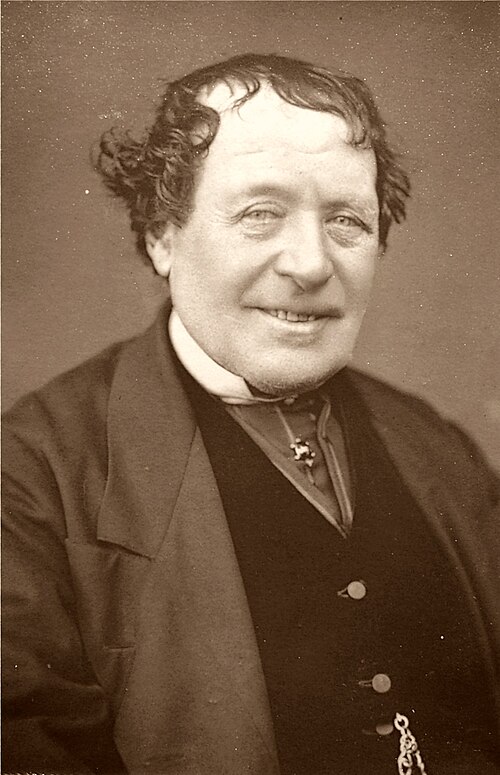
Webster was another of that breed of peripatetic actor-managers who spread his talents between playwrighting, the management of theatre companies and acting, in his case specialising like Compton in low comedy. He was also a significant figure in the ‘gentrification’ of theatre. After his period in control at Liverpool, Webster went on to manage the Adelphi between 1844 and 1874, and the Haymarket between 1843 and 1853, both prominent theatres in London’s West End. As Webster rightly observed, one cause of the commercial difficulties of theatre in the early nineteenth century was surely its almost total disregard for the quality of experience and overall comfort of the audience. For the vast majority, it was cramped, unhygienic and lacking in amenities or even decent sight lines. In response to this state of affairs, Webster had the Adelphi completely rebuilt and refitted. As the Illustrated Times noted, Webster “had placed the middle-class within the theatre on a footing of complete equality with the highest and wealthiest in the land.”56 And as Professor Rohan McWilliam has observed:
“This presaged the rebuilding that was to come. Webster went on to redesign the Haymarket, removing pit benches for stall seats. There was a comfort revolution that swept through mid-Victorian theatres such that they created an atmosphere not entirely distinct from the clubs of St. James’s.”57
Compton’s association with Webster was a happy one. Though we have no record of it, his influence at the Theatre Royal Liverpool must surely have been similar, and would very much have suited an actor like Compton. It may even, as we shall later examine, have affected his acting style. Compton would later spend many happy years at the Haymarket Theatre – in fact, eighteen in all – where Webster’s influence was also felt.
Romance
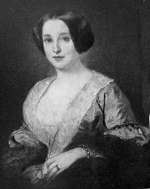
But it was at the Theatre Royal Liverpool that Henry Compton became engaged to fellow actress Emmeline Montague . They had in fact first met at Drury Lane in 1839 when Compton was cast as the Apothecary in Romeo and Juliet with Emmeline as the eponymous heroine; but it was not until they were both appearing at Liverpool in1842 that they seem to have become romantically attached. Emmeline, as has already been noted, was herself from an established theatrical background, both her parents being actors on the Bristol and Bath circuit. Their engagement would be a long one, lasting some six years before they felt able to get married. One can only assume that it was the repeated experience of unemployment and the financial insecurity it entailed that delayed their final commitment. His son Edward quotes his father as saying “I never feel safe” and remarks that “so uncertain did he think the profession that he would never advise anyone to enter it.”58 (Interesting to note that, as we shall see, despite this advice, most of his children did enter the profession!)
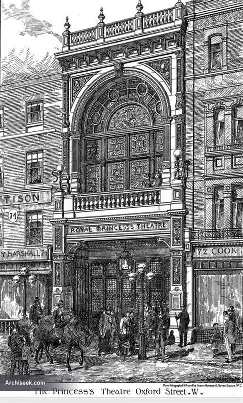
Certainly, this was a particularly unsettled period in his career. After a season in Liverpool, he once again found himself back in Dublin, but this too was only for a single season. Finally, in 1844 he found regular employment once again in London. This was at the newly opened Princess’s theatre on Oxford Street under the management of John Meddex Maddox. The theatre had been built in 1840 on the former site an exhibition hall known as the Queen’s Bazaar.59 In 1843, under the terms of the new theatre licensing law, it was granted a patent by the Lord Chamberlain, thus joining that legion of new venues that were gradually extending the reach of the West End. For the likes of actors such as Henry Compton this could only be a welcome development as the stifling duopoly of Drury Lane and Covent Garden increasingly came under challenge. Maddox was clearly keen to get his man. “There can be no mistake”, he wrote to him, “you have first low comedy, and I will speak to the best authors to write something good for you.”60
On 11 November 1844 Henry Compton appeared as Touchstone in Shakespeare’s As You Like It, alongside illustrious cast members that included Charles Macready, Fanny Kemble (18089-93) and the controversial American actress Charlotte Saunders Cushman (1816-1876). Also to join the company would be Emmeline Montague appearing as Helen to Compton’s Modus in The Hunchback by James Sheridan Knowles (1784-1862). They would remain together in the company for a further four years.
Married
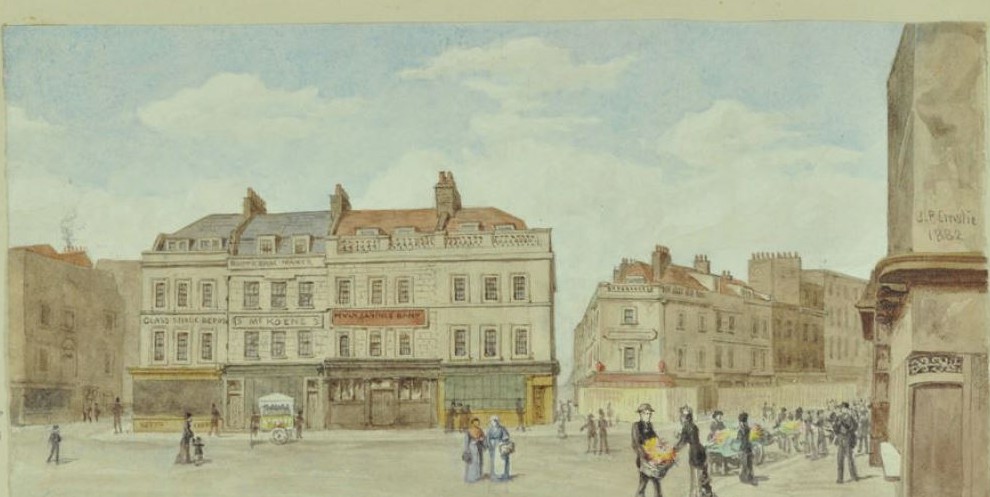
Then at last, in 1848, they felt financially secure enough to get married. The wedding breakfast took place at the Hammersmith home of Compton’s longstanding friend, Mark Lemon. It was left to Emmeline to search out suitable accommodation, big enough for family life but close enough to the West End for Henry to fulfil his professional commitments. They settled in an apartment at 16, Charing Cross Road, just a stone’s throw from his favourite club, The Garrick and almost immediately opposite what would become in 1856 the National Portrait Gallery.
Up to that point, Compton had lived a nomadic existence in typical bachelor lodgings in various parts of London from Stamford Street and the Brompton Road to the Strand and Knightsbridge. Now his focus would shift entirely to the family and home life. His memoir describes him as:
“[…] tall and slim. He stood 5ft 101/4 in. without boots, and his weight rarely exceeded eleven stone. […] He possessed great muscular power, which, joined to his lightness, gave him the strength of heavier men without their unwieldiness.”61
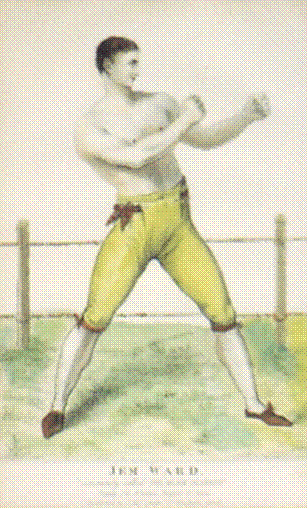
He seems to have been extremely fit and energetic, a characteristic no doubt both useful for and enhanced by the many miles of walking that were intrinsic to the actor’s life. Indeed, whilst domicile at Charing Cross Road, his sons recall his regular returns home “between the pieces when he had a longish ‘wait.’”62 This physical fitness and agility must surely have stood him in good stead as a comedian; and it was further expressed in his many sporting hobbies that ranged from riding and skating to rowing and boxing. In this last pursuit he achieved some considerable skill, befriending and training with several notable Victorian champions of the ring, including Jem Burns, Young Reed and Jem Ward (1800-1844). He would later teach all his sons to box.63
Among his other leisurely pursuits, reading seems to have been the most prominent. Both his parents were avid readers and his mother, it seems loved to read aloud to her family, as would Henry Compton to his.64 Among his favourite authors there ranked Milton, Sir Walter Scott, Byron, Coleridge, Burns and Wordworth, the Elizabethan, Jacobean and Restoration playwrights, Fielding, Southey, De Quincey, Charlotte Bronte and of course, his friend Charles Dickens. The Garrick was his favourite club (a mere stroll from the apartment on Charing Cross Road) and his memoir suggests he may have been a founder member. His social circle included many contributors to Punch, including Douglas Jerrold, Mark Lemon, the editor, and the social reformer Henry Mayhew (1812-87). In his political outlook, his sons describe him as “a thorough Conservative”;65 though his association with Dickens, Lemon and Mayhew, and his advocacy of greater accessibility to theatre for the general public suggest that he had a ‘reformist’ side. He was indeed a frequent visitor to the House of Commons, gaining admission through his many friends in the press, though his main interest appears to have been in the quality of the oratory, rather than the substance.
Compton was a keen observer of his fellow man, finding in a quirk of speech, a gait, a facial expression or mannerism, rich pickings for his comic performances. But his interest was not merely in the everyday passers-by of the Charing Cross Road or Covent Garden. He deliberately sought out those he considered unusual or exotic, those on the margins of society. He would frequently take night walks through the streets of London in the company of a police constable or inspector, often through some of the roughest and poorest neighbourhoods such as the notorious Ratcliff Highway from Smithfield to Limehouse. In this way he was able:
“[…] to use his own words ‘to take stock of’ the occupants of licensed lodging-houses and sailors’ lodging-houses, the frequenters of thieves’ kitchens, and the inhabitants of the Jewish quarters. He was ever on the alert, when out on the streets, to seize the opportunity for observing any “character” in the way of a hawker, Cheap Jack, or purse-trick man, particularly if he had a good ‘patter’.”66
In contrast, Compton himself seems to have lived an abstemious life. He drank but rarely and despite his interest in sports, eschewed any form of gambling. On the whole, the puritanical misgivings of his family regarding the ill-reputed profession upon which he had embarked seem deeply ironic. They could hardly have wished for a more sober and upright son.
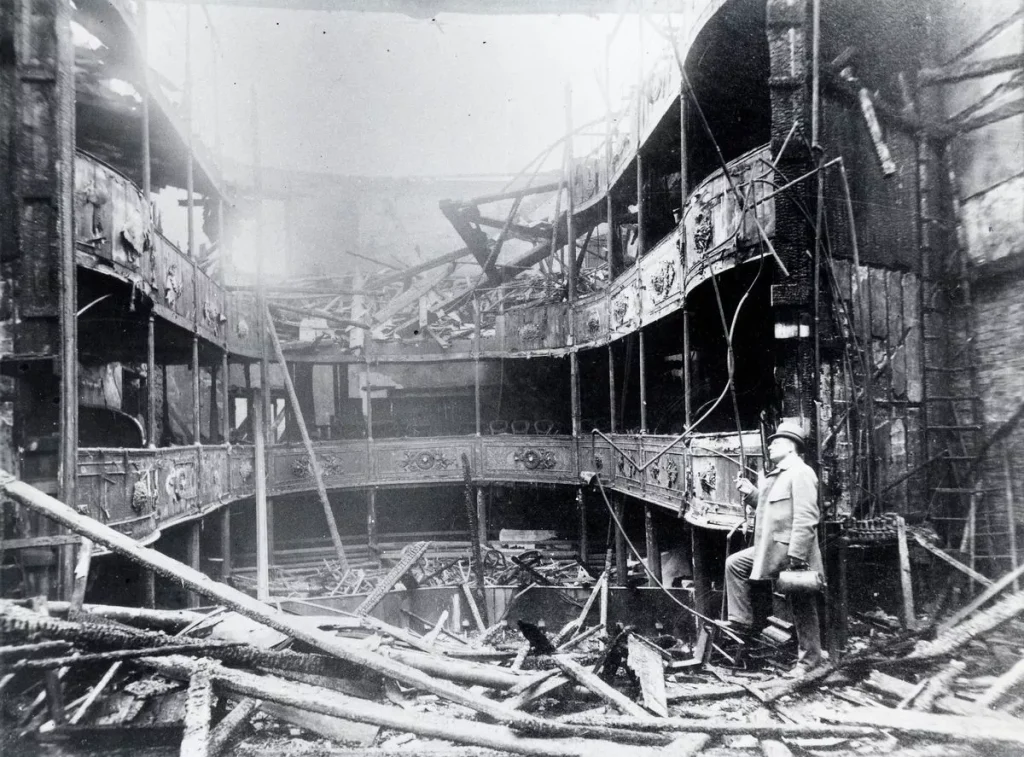
Once the conjugal knot was tied, Emmeline Compton (née Montague) was required “at my father’s wish”, as his son Edward puts it, to give up her promising acting career and focus entirely on family life.67 Henry meanwhile felt sufficiently emboldened by his regular successes at the Princess’s theatre to move on to what he might have considered more prestigious ground at the Olympic Theatre at Wych Street off the Strand, then under the management of the great farceur William Farren (1786-1861). When that venue burned to the ground in 1849 – an event that Henry Compton himself witnessed – he loyally remained with the same company as it transferred along the road to the Strand Theatre, and then back again to the Olympic once it had been restored and reopened later that same year. Indeed, this period was one of relative stability for Henry Compton, remaining with Farren’s company for a further four years, during which time he and Emmeline produced the first four of their nine children.
The Haymarket

Then in 1853 he was on the move again, this time to the Haymarket Theatre Royal under the actor-management of John Baldwin Buckstone (1802-79) where until 1871, he would enjoy his longest period of secure employment. Buckstone, a close associate of Ben Webster, had spent much of his acting career at the Adelphi, and together they had transformed the fortunes of the newly refurbished Haymarket. Here they established a more genteel, respectful and gentrified ambience in far greater comfort as opposed to the boisterous, sometimes riotous atmosphere of the earlier Georgian theatre. This surely would have suited Compton’s style, renowned for its subtlety and restraint; a topic to which we shall later return. It is also worth emphasising that both these actor-managers were themselves specialists in low comedy; a testament to Henry Compton’s ability that they sought out his talent in a field especially familiar to them.
Through sheer commitment and determination, Henry Compton had once again found his way back to the pinnacle of his profession, a regular and reliable cast member at the Haymarket, the one West End theatre that was probably most on a par with the Lyceum, Covent Garden and Drury Lane. His former boss, William Farren was already close to retiring when he made the move from the Olympic, which may have been a factor in his decision. Indeed, in 1855 Farren performed his farewell benefit at the Haymarket. Significantly, this was under the patronage of Queen Victoria, giving further testament to the increasing ‘respectability’ of the profession. And the benefit took the form, as many did, of a kind of prototype ‘variety’ event, featuring a whole host of performers, the first or second acts of several hit plays including Box and Cox an early piece by Gilbert and Sullivan and even “a new Spanish ballet by Senora Perea Nena, Senor Marcos Dioz, and ‘their twelve unequalled coryphées”.68
Over the course of the next eighteen years at the Haymarket, Compton would perform many of the major comic roles in the repertoire ranging from Dr Pangloss and Touchstone to Paul Pry and Dogberry in Much Ado About Nothing as well as in a host of popular farces by James Planché (1796-1880) and H. J. Byron (1835-1884). The Haymarket Company also went on annual national tours that took in major cities such as Manchester, Liverpool, Newcastle, Birmingham, Glasgow and Edinburgh. Whilst in Manchester playing Blenkinsop in An Unequal Match by Tom Taylor (1817-80) Compton received one of his more pithy and perceptive press reviews:
“The great charm of Mr Compton’s acting is its absence of effort. Although his face can assume the most comical expression, he never grimaces. Sometimes an elevation of the eyebrow, a sudden twitch of the mouth, a turn of the wrist, or lifting of the foot will provoke unbounded merriment, but all these are so spontaneous that they are more supplements to the words he is uttering, or the situation of the piece, than mere stage tricks and devices.”69
Among contemporary comic actors, the likes of John le Mesurier or Bill Nighy spring to mind; a classic case of less is more, suggesting perhaps a gradual change in taste and approach whereby just a decade before, Edmund Kean’s fame seems to have been based on ‘more is more’. Bear in mind too that Compton’s artistry was confined to the stage, whereas later performers could enjoy the benefit of the close-up camera to display their subtler skills.
Another factor that may well have played to Compton’s innovative strengths was the technological advance taking place in stage design. Gas lighting had gradually replaced the original candle light, and in 1837 the first use of limelight was introduced,70 each step enhancing the actor’s ability to project facial expression. Compton had cut his teeth on the provincial circuits of ad hoc theatres, which would often have been in much closer proximity to the audience, more intimate and rudimentary than the relatively vast arenas of the West End. This was the nursery of his style, a training that stood him in good stead as he himself often claimed.
Royal Command
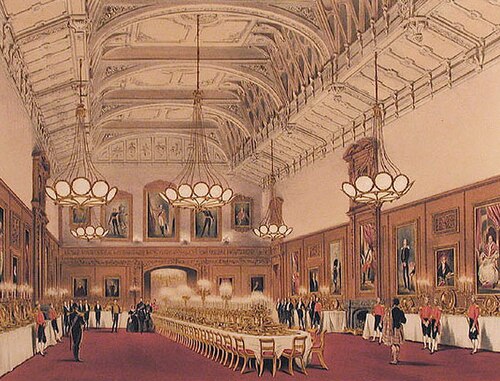
Once again to emphasise the significance of Queen Victoria’s support for the theatrical arts, in 1857 the Haymarket Company was invited to give a private performance at Windsor Castle. In fact, Henry Compton had appeared there almost a decade before in 1849, and his wife Emmeline a year before that reprising her role as Juliet to Charles Kemble’s Romeo. This would have been one of her last fully professional acting engagements for, as has already been noted, following her marriage, Emmeline was obliged to give up her career and to focus on the home. This in itself represents something of a sea change in attitude from a previous era, the increasing ‘respectability’ of theatre bringing with it concomitant restraints of a Victorian nature. One doubts that retirement from the stage in order to devote oneself entirely to child-rearing would have occurred in quite the same way to Sarah Siddons, Mrs Jordan or Fanny Kemble, who all seem to have managed both roles simultaneously, and more than adequately.
Dickens & the Literary Guild
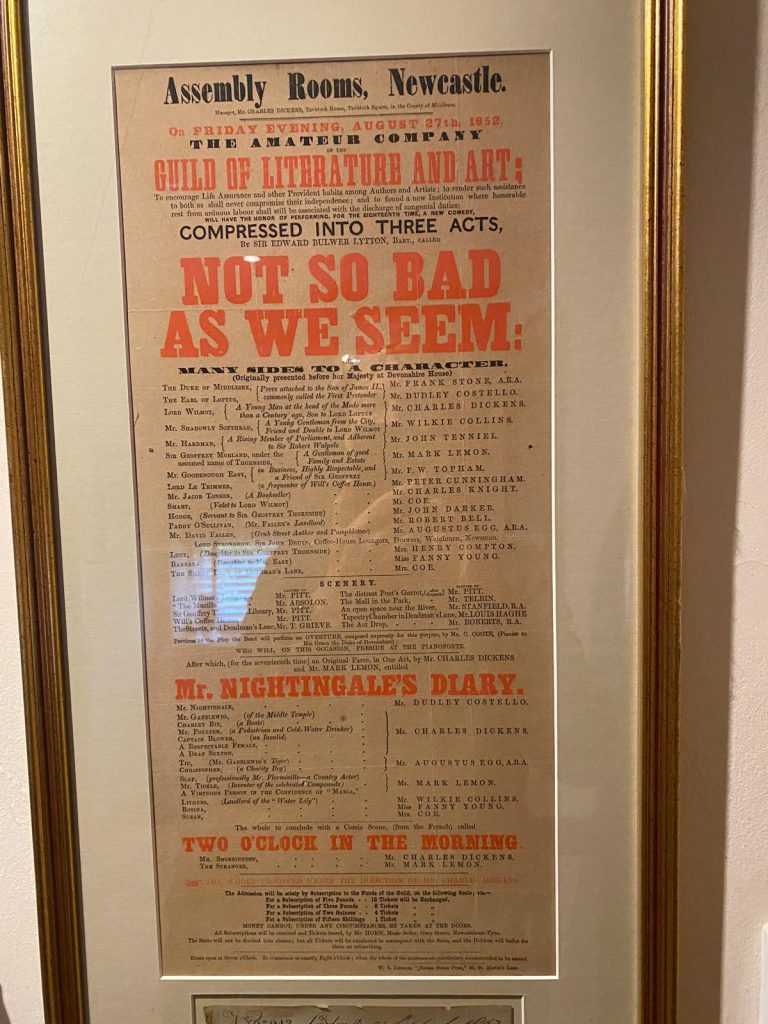
However, immediately prior to her early retirement, Emmeline Compton did undertake one more significant professional engagement. Edward Compton writes:
“After her marriage, she went on a short tour with Charles Dickens’s well-remembered company, comprising many of the staff of “Punch”, and termed the ‘Literary Guild’.”71
Charles Dickens (1812-1870) was a close associate, if not friend, of Henry Compton. The link here is likely to have once again been Mark Lemon who was then editor of Punch. Several of this magazine’s contributors were members of what was essentially, despite Emmeline’s participation, an amateur theatrical company. These included, the dramatist and wit, Douglas Jerrold, another close friend of the Comptons, and the cartoonists and illustrators George Cruikshank (1792-1878) and Sir John Tenniel (1820-1914) as well as Mark Lemon and Dickens himself. The idea first originated with the author and politician Sir Edward Lytton (1803-73) who lent his support to the project. Indeed, he wrote one of its first productions, a comedy entitled Not So Bad As We Seem (a wry nod to their amateur status perhaps), performed before Queen Victoria and Prince Albert at Devonshire House in Piccadilly.
The company achieved great popularity, touring the provinces and providing an opportunity for the public to see famous faces they otherwise might not, principally of course that of Charles Dickens. And for the cast, it presented an opportunity to ‘tread the boards’, perhaps many of these assembled ‘celebrities’ feeling themselves to be actors manqués, not least Dickens himself. Of his friendship with the Comptons, Edward Compton writes:
“My father had made Dickens’s acquaintance shortly before his marriage, and they afterwards became intimate. He frequently visited at Dickens’s house where he met the most celebrated men of the day.[…] Every subject of the day came under the discussion of the men best fitted to discuss it; politics, literature, and the drama were each treated with a felicity of phrase, a practical knowledge, and a subtlety of discrimination seldom met with.”72
One wanders, could there be a clearer illustration of the rising respectability and indeed, the social significance of the theatrical life; something which was also beginning to manifest itself financially in the lives of the Comptons. For in 1857, they were able to vacate their by now somewhat cramped apartment on Charing Cross Road, and with seven children in tow, move to a house on Stanford Road, in the up and coming Borough of Kensington, West London.
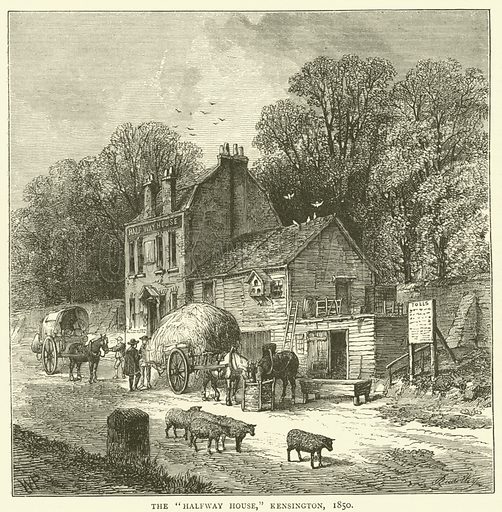
Before long, there was to be another change of address. For over the next three years, Henry was able to oversee the building of new premises on the same road, which he named Seaforth House. A tribute to his Scottish ancestry, the name paid homage to the title of the Earls of Seaforth, an ancient Scottish peerage once held in the 17th and 18th centuries by his own family of Mackenzie. At last, one feels, Henry Compton felt able to lay the ghost and cast off the stigma of a ‘strolling player’ and to present himself to his puritanical forebears as not only successful and settled, but as the practitioner of a respectable craft. What better way than in a newly-fashioned home bearing the ancient title of his ancestry, and in the heart of fashionable Kensington.
It is surely also testament to the Compton’s greater financial security and status that they were able to make the transition from cramped rented accommodation on Charing Cross Road to that of property owners in West London. Several factors may have contributed to this. First of all, regular employment at the Haymarket would have provided a steady and improved income. Though he made his professional debut in 1856, some two decades later than Henry Compton, Henry Irving was earning between 30 shillings and 3 pounds a week during this same period, playing lead roles in provincial theatres.73 Specific figures are difficult to come by, but as a more seasoned professional in a leading London theatre, Compton may be expected to have earned in the region of £6 a week – a considerable advance on the 25 shillings of his ‘strolling player’ days.
Furthermore, his father the Reverend John Mackenzie, had died in 1846.74 As the second son, he would not have been in direct line of the principal inheritance; this would have passed to his elder brother Stephen Mackenzie who had adopted one of the more traditional (and respectable) family professions as a physician. However, Compton had re-established good relations with his family and may well have come in for a portion of the legacy; and again, too when his brother Stephen died soon after in 1851. Taken together, these factors all indicate a sounder footing for the Compton household, and may well have contributed to his decisions at various times both to marry and start a family and to take up ownership of Seaforth House.
By 1871, however, after eighteen continual years of residency, Henry Compton was finding himself increasingly sidelined at the Haymarket. Principal comic roles were routinely being offered to rival members of the cast such as Edwin Sothern (1826-81), Charles James Mathews (1803-78), son of the great actor of that same name, or the manager, John Buckstone himself. By this time, Compton was in his late sixties, a veteran, not to say ‘old man’ of the theatre; this at a time when the average life expectancy for males was a mere 41 years. Perhaps he was being expected to make way for a younger talent. Perhaps the audience had grown over-familiar with his manner and sought fresh blood. Perhaps, at times the very subtlety of his style was beyond them. However, as we shall see, his finest hour on the stage was yet to come.
In the end, he decided to quit the company and take up an offer of the lead role in a new comedy, Handsome Is As Handsome Does by Tom Taylor (soon to become replacement editor of Punch) at Prince’s Theatre, Manchester, then under Charles Calvert (1828-79). This was not a success and after a single season Compton moved on once again, this time to the recently built Globe Theatre on the Strand (not to be confused with its modern namesake). This was then under the control of the British-American actor, Henry James Montague (1843-78). (He was not a relation of Emmeline Montague, his surname being a stage name, in place of his birth name of Henry John Mann).
Here Compton appeared as Muggles in H. J. Byron’s Partners For Life and this time, the production was a great success. He had taken an extraordinary gamble in relinquishing his position at the Haymarket and returning to the peripatetic life of a touring actor; particularly in view of the fact that he was now of relatively advanced years and the father of nine children. But his gamble had paid off. Further successes followed until on 31 October 1874 he opened at the Lyceum Theatre in what would prove to be his most memorable and enduring performance; that of the First Gravedigger to Henry Irving’s Hamlet.
Hamlet at the Lyceum
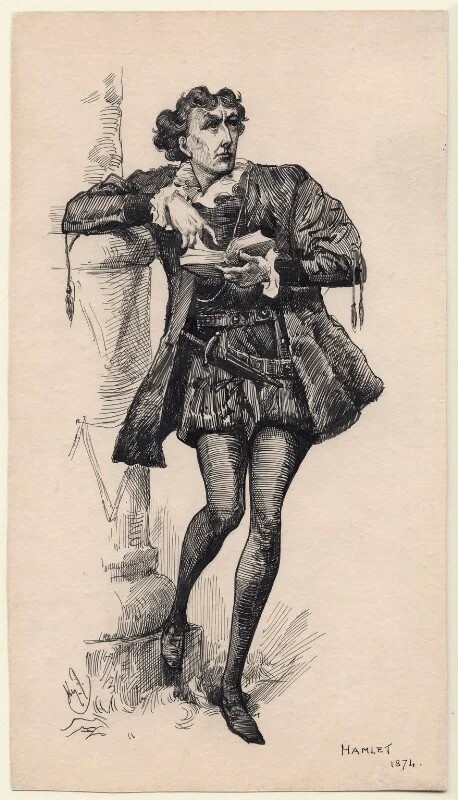
The pairing of Irving and Compton had all the hallmarks of a great theatrical match. Irving’s biographer Michael Holroyd has pointed out “the novelty of his [Irving’s] acting which avoided the grand artificialities of the old school.”75 His theatrical hero was Edwin Booth, who had brought from the United States, a more subtle, low-key and nuanced style. This seems in many ways to echo the approach of Henry Compton who was widely praised for his performance as the First Gravedigger. It is worth quoting a selection of press reviews in order to affirm just how well received his performance was. For example, this from Vanity Fair:
“To my mind the most noticeable performance was that of the First Gravedigger. [It] is the gem of the present presentation. Here, indeed, is not trace of the elocution-master; here is no nineteenth century actor airing his graces and eccentricities. […] He is as real as the property skull that he identifies and passes over to Hamlet, who performs his less difficult task of moralising upon it.”76
And this from The Era:
“Mr. Compton as the First Gravedigger emphatically asserts his claim to the position of the first Shakespearian actor on the stage. His very manner and sententious, dry delivery are admirably suited to the character of a Shakespearian clown. […] No better selection than this could possibly have been made. The humour of Mr. Compton is true and racy humour. His eyes sparkle over it, and he seems to lick his lips in enjoyment over it. […] There is no straining at points of elaborating the comic business until it becomes a nuisance.” 77
From The Sporting Gazette:
“Mr. Compton’s gravedigger is simply perfect […] In his battle of words with Hamlet he absolutely for a moment threw Mr. Irving into the shade, so quaint, so characteristic, and so original was his humour.”78
From The London Evening Standard:
“A very special feature was the First Gravedigger of Mr. Compton. The dry humour of this most excellent comedian was valuably displayed.”79
And so on, Henry Compton’s performance as the First Gravedigger garnering praise from a whole host of journals ranging from The Daily Telegraph and The Morning Advertiser to provincial newspapers like The Andover Chronicle, whose very presence testifies to the broadening public interest in theatre, and that of the West End in particular. In his memoir, written and compiled by his sons Edward and Charles, a press review is quoted for which, unfortunately, the original source is not given; however it is worth adding here, both to confirm the quality of his acting reputation and the fact that his family were well aware of it.
“Nothing can be more excellent than Compton’s Gravedigger in ‘Hamlet’. There is a deliberation about every action of the man which admirably illustrates the character. […] He is like a Dutch painter – his details are elaborately accurate and yet the whole is impregnated with that delicate sense of humour which is so charming and yet so rare.”80
The production of Hamlet at the Lyceum ran for over one hundred and fifty performances. It would cement the reputation of Henry Irving as the greatest tragedian of his time. However, it would be the last appearance of Henry Compton at the Lyceum, or indeed on the London stage or in any Shakespearean role. Despite the plaudits, his talents were no longer required at the end of the run. One can only speculate as to why this should have been; but it is not difficult to imagine that such a self-regarding powerhouse as Henry Irving would not take kindly to reading that he had been thrown “into the shade” by a fellow actor who was “the first Shakespearian actor on the stage”; particularly as Compton was playing a relatively minor character, in a relatively short scene, appearing relatively late in a long play. The laughter alone that Compton inspired may have been enough to rankle and ‘throw’ him. It may also have been that Compton was already show signs of the illness to which in a few short years he would fall prey.
Final Years
Be that as it may, in 1875 Henry Compton, once again found himself obliged to take up the offer of a provincial tour – this time with the newly-formed Vezin-Chippendale Company. Reprising some of his most celebrated roles, for example as Dr. Pangloss in Candide and Mawworm in Isaac Bickerstafffe’s The Hypocrite, he set about a gruelling itinerary that took in Newcastle, Manchester, Birmingham, Glasgow, Edinburgh and Aberdeen. It surely must have taken a heavy toll on what was by then an elderly and increasingly sickly man; after two years Henry Compton succumbed to “his last illness, cancer” which his sons Edward and Charles describe as a “painfully prolonged”. He died on 15 September 1877. He was seventy-two years old.81
Fortunately, his final years were blessed with a string of extremely successfully benefit nights, the first, in Manchester at the Prince’s Theatre, was “packed from floor to ceiling”82 . And this being the history of the Compton dynasty, it is worth noting that it was on this occasion that Henry introduced his eldest child, his daughter Katherine Compton (1853-1928), onto the stage. The Drury Lane theatre also paid its respects to a great talent by holding not just one, but two benefit nights; the first at Drury Lane itself, the second at the Theatre Royal, Manchester. His retirement from the stage was announced in March 1877, owing to his being “visited with a terrible physical infirmity”.83 However, it seems that he somehow rallied sufficiently to continue working for a while, his final appearance being at the Prince of Wales Theatre, Liverpool on Saturday 14 July 1877; just a few short months before his death. Rather poignantly, he was joined on stage for this performance by another of his children, his eldest son, Edward.84 He too, like his sister Katherine, had taken up the acting profession – as, in time would his younger brothers Henry, Percy, Otway and Sidney; each of whom it seems had rejected their father’s advice to steer clear of it!
Henry Compton was buried at Brompton Cemetery on 22 September. A procession of a hearse and four horses, plus four mourning coaches and several private carriages left Seaforth House at 11.30 a.m., proceeding through the streets of Kensington to its final destination at noon.85
“An unusually large concourse of mourners awaited the arrival of the funeral procession at the mortuary chapel, and nearly every member of the theatrical profession of any note, whose engagements permitted them to be there, was present.”86
This included the librettist and satirist W. S. Gilbert (1836-1911) and the burleque actor and comedian Edward Terry (1844-1912). Obituaries and reports of the funeral appeared in all the major London periodicals, but also in scores of provincial papers, ranging from the Bradford Observer and Preston Pilate to the Liverpool Mail; a testament not only to Compton’s widespread renown and popularity, but also to the increasingly nationwide interest in the theatre and the growing status of the acting profession.
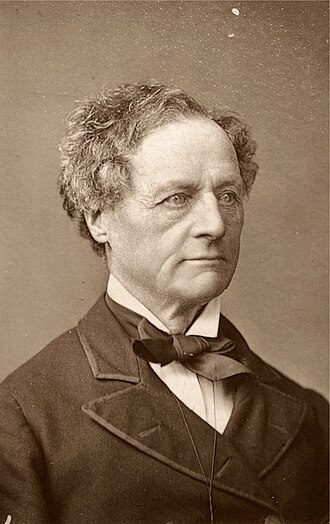
Like Joseph Cowell, Henry Compton was the first of his family to embark on a theatrical career. Both were similarly driven and determined, and in their different ways, both pioneering and talented. On the surface, Cowell was the more openly swashbuckling and adventurous of the two with his exploits into circus and musical theatre and across America in particular; but Compton too was a bold pioneer in his own subtle and idiosyncratic style of acting. Though he comes across perhaps as a more introverted and academically-minded student of the theatrical arts than Cowell, the net result in his actual performances could often be shamelessly show-stopping and scene-stealing as evident in his reviews as the First Gravedigger in Hamlet.
He also comes across as the more conservatively minded of the two, tending towards the established viewpoint in defence of the status quo, whereas Cowell appears generally to have leaned towards the more liberal cause whenever an issue emerged. And whereas Cowell’s life was the more widely travelled and eventful, Compton seems to have placed the emphasis much more upon the security and stability of family life.
In short, while Cowell might be said to represent a true Georgian, Compton surely strikes us as a somewhat typical Victorian; their differing careers reflecting the different eras and contexts in which they performed. However, both were passionately wedded to the theatre as an art form and a way of life, even to the extent that they took an immense gamble in the undertaking of it, showing great tenacity and perseverance in the face of adversity, particularly financial and domestic. For both men it was clearly a vocation. Neither was afraid, when they felt it appropriate, to buck the trend, placing a great deal of integrity, novelty and ingenuity in the pursuit of their craft. Though their names are not emblazoned on any plaques, their persons not represented in any statues, nor even very much recorded in history, they were surely two very notable, not to say great and pioneering exponents of the acting craft in their respective times.
Next, we shall go on to explore the very different ways in which they passed on the theatrical mantle to the succeeding generation, those of their descendants – and there were many – who took up a life on stage.
CITED SOURCES
Compton, Charles & Edward (ed), Memoir of Henry Compton (London: Tinsley Brothers, 1879)
Mackenzie, Compton, My Life and Times Volume One (London: Chatto & Windus, 1963) abbr. as Memoir
The British Newspaper Archive: online
Donohue, Joseph (ed), The Cambridge History of British Theatre Volume Two 1660 to 1895 (Cambridge: CUP, 2004)
Holroyd, Michael, A Strange Eventful History: The Dramatic Lives of Ellen Terry, Henry Irving and Their Remarkable Families (London: Chatto & Windus, 2008)
McWilliam, Rohan, Creating the Pleasure District, London’s West End 1800-1914 (Oxford: OUP,, 2020)
Forbes, Bryan That Despicable Race, A History of the British Acting Tradition (London: Elm Tree Books, 1980)
Trewin, J.C. ed. The Journal of William Charles Macready 1832-5 1(London:Longman, Green & Co. Ltd, 1967)
Howard, Diana London Theatres and Music Halls 1850-1950 (The Library Association, 1970)
Disher, M. Willson The Cowells in America 1860-61 (London: OUP 1934)
FOOTNOTES
- Mackenzie, Compton My Life and Times Octave One pp.18-22
- Anthony Binns A Dynasty On Stage Part One: The Life & Times of Joseph Cowell
- Memoir p.25
- Ibid p.159
- Garlick, Gorel Theatre Outside London 160-1675 in Donohue, Joseph (ed), The Cambridge History of British Theatre Volume Two 1660 to 1895 (Cambridge: CUP, 2004) p. 170
- Memoir p.13
- Ibid p.21
- Ibid pp.21-2
- Ibid 22
- Ibid p.24
- “I do not approve of the stage”, wrote the Reverend James Mathews, his father, in a letter, “but I will not oppose your wishes. At any time hereafter, should you feel inclined to turn to an honest calling, there are twenty guineas more, if you send for them, and your father’s house is open to you.” Note the implication of the stage as a “dishonest calling”. A Dictionary of Printers & Printing. London, H.Johnson1839. p .219.
- Charles Mathews was a popular favourite of nineteenth century artists and authors, among them Charles Dickens who modelled many of his performances and readings on Mathew’s works. Mathew’s classic play in this style was entitled At Home, premiered at the Haymarket in 1808. It is perhaps a moot point as to whether the play title referenced the fashion for domestic performance, or conversely, it gave rise to the very expression and enhanced the trend.
- Memoir p.27
- Moody, Jane The Theatrical Revolution 1776-1843 in Donohue, Joseph (ed), The Cambridge History of British Theatre Volume Two 1660 to 1895 (Cambridge: CUP, 2004) pp.199-215
- Ibid
- Garlick, Gorel Theatre Outside London 160-1675 in Donohue, Joseph (ed), The Cambridge History of British Theatre Volume Two 1660 to 1895 (Cambridge: CUP, 2004) pp.165-182
- Online:archive.org/4/items/wagesinunitedkin00bowl/wagesinunitedkin00bowl.pdf p.22
- Memoir p.36 I have thus far been unable to ascertain more information on the said Mr Simms, although he is presented as a figure of some importance in that year of 1826.
- Memoir p.39
- Ibid p.37
- Ibid pp.24-5
- Ibid p.46
- The Lincoln Gazette 27 November 1832.
- See my earlier blog: Joseph Cowell in America.
- Memoir p.48
- Ibid p.51
- Ibid p.50
- Figures quoted from Consumer Price Index online
- Memoir p.300
- Figures quoted from online louthlincs.org
- Memoir p.60
- Milhous, Judith Theatre Companies and Regulation in Donohue, Joseph (ed), The Cambridge History of British Theatre Volume Two 1660 to 1895 (Cambridge: CUP, 2004) p.122
- Garlick, Gorel Theatre Outside London 160-1675 in Donohue, Joseph (ed), The Cambridge History of British Theatre Volume Two 1660 to 1895 (Cambridge: CUP, 2004) p.175
- Quoted in Forbes, Bryan That Despicable Race, A History of the British Acting Tradition (London: Elm Tree Books 1980) p.10
- Memoir p.49
- Ibid p.52
- Ibid p.62-3
- Ibid p.57
- Ibid p.59
- Chisholm, Hugh: Alfred Bunn, Encyclopaedia Britannica Vol 4, 11th ed. CUP p.799 (1911)
- Memoir p.74
- Ibid pp.75-6
- Ibid pp.76-7
- Ibid
- Ibid
- Ibid
- Ibid p.74
- Ibid p.81
- Ibid p.84
- Ibid p.90
- Ibid p.90
- Chisholm, Hugh: Alfred Bunn, Encyclopaedia Britannica Vol 4, 11th ed. CUP, 1911; p.799
- Memoir p.91
- Ibid p.104
- Trewin, J.C. ed. The Journal of William Charles Macready 1832-51. Longman, Green & Co. Ltd, 1967
- Illustrated Times, 1 January 1859, pp.11-12
- McWilliam, Rohan, London’s West End, OUP 2020 p.162
- Memoir p.157
- Howard, Diana London Theatres and Music Halls 1850-1950 The Library Association 1970, p.186
- Memoir p.167
- Ibid p.106
- Ibid p.188
- Ibid p.115
- Ibid p.140
- Ibid p.236
- Ibid p.148
- Ibid p.157
- Ibid p.176
- Ibid p.177-8
- McWilliam p.123
- Memoir p.160
- Ibid p.194-5
- Holroyd p.100
- Disher p.xliii
- Holroyd p.99
- Vanity Fair 21 Nov.1874 p.289
- The Era 6 Dec.1874 p.9
- The Sporting Gazette 14 Nov. 1874
- The London Evening Standard 2 Nov. 1874
- Memoir p.210
- Ibid p.244
- Ibid p.212
- Illustrated London News 3 March 1877
- Memoir p.216
- Kilburn Times 29 Sept. 1877
- Illustrated Sporting & Dramatic News 22 Sept. 1877
